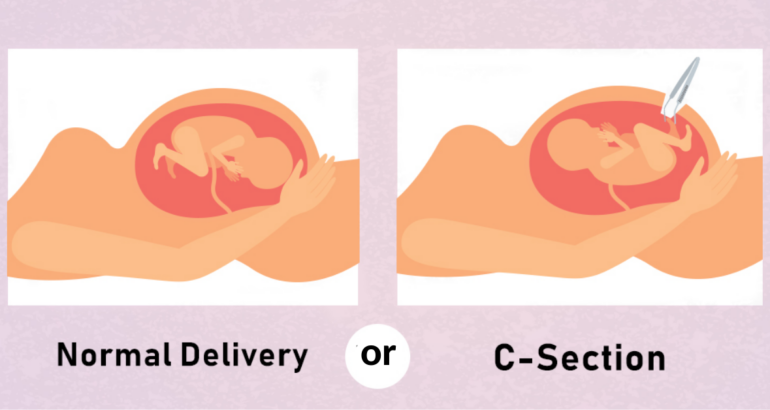
According to global maternal health statistics, around 21% of births worldwide occur through cesarean section (C-section). Childbirth generally happens in two ways: normal vaginal delivery or C-section delivery. The method chosen depends on the health of the mother, the condition of the baby, and how the pregnancy progresses.
A normal delivery, also known as vaginal birth, occurs naturally when the baby passes through the birth canal during labor. A C-section delivery, on the other hand, is a surgical procedure in which the baby is delivered through incisions made in the mother’s abdomen and uterus.
Understanding the differences between these two delivery methods—including the process, recovery time, and medical indications—can help expectant mothers prepare for childbirth and make informed decisions with their obstetrician.
Key Differences Between C-Section and Normal Delivery
Both delivery methods are safe when performed under proper medical supervision, but they differ in several important ways.
Delivery Method
-
Normal delivery occurs naturally through the birth canal during labor.
-
C-section delivery involves a surgical procedure to remove the baby through abdominal and uterine incisions.
Medical Indications
-
Vaginal birth is usually recommended when pregnancy progresses without complications.
-
A C-section may be advised when there are risks to the mother or baby during pregnancy or labor.
Recovery Time
-
Recovery after a vaginal birth is generally quicker.
-
Surgical recovery from a C-section usually takes longer because it involves healing from an operation.
Hospital Stay
-
Mothers who deliver vaginally may leave the hospital sooner.
-
C-section deliveries typically require a 2–4 day hospital stay for monitoring and recovery.
What Happens During a Normal Delivery?
Normal delivery occurs through natural labor contractions and typically progresses through three stages.
Stage 1: Early and Active Labor
In the first stage, the cervix gradually opens (dilates) to allow the baby to move through the birth canal. Full dilation usually reaches about 10 centimeters, which is necessary for childbirth.
During this stage:
-
Contractions become stronger and more frequent
-
The cervix continues to dilate
-
The baby gradually moves down toward the pelvis
This stage may last several hours depending on the progression of labor.
Stage 2: Birth of the Baby
Once the cervix is fully dilated, the mother begins pushing during contractions. The baby then moves through the birth canal and is delivered through the vagina.
The duration of this stage varies widely. It may last only a few minutes for some women, while others may require a few hours.
Stage 3: Delivery of the Placenta
After the baby is born, the placenta separates from the uterus and is delivered. This final stage usually takes between 5 and 30 minutes.
Most women recover from a normal delivery within 2–6 weeks, depending on their overall health and healing process.
What Is a C-Section Delivery?
A C-section (cesarean section) is a surgical procedure used when vaginal delivery may not be safe for the mother or baby. During the operation, doctors deliver the baby through carefully made incisions in the abdomen and uterus.
In uncomplicated cases, the procedure typically takes around 45 minutes and is performed under anesthesia so the mother does not feel pain during surgery.
Steps Involved in a C-Section Procedure
1. Administration of Anesthesia
Doctors usually use spinal or epidural anesthesia to numb the lower part of the body. The mother remains awake but does not feel pain during the operation.
2. Abdominal Incision
A small horizontal incision is made in the lower abdomen, commonly called a “bikini cut.” This allows the surgeon to access the uterus.
3. Uterine Incision and Baby Delivery
The uterus is carefully opened, and the baby is delivered. In most cases, the baby is born within 10–15 minutes after the incision is made.
4. Placenta Removal and Closure
After the baby is delivered, the placenta is removed. The uterus and abdominal incision are then closed using surgical stitches.
Women who undergo a C-section typically stay in the hospital for 2–4 days to ensure proper recovery and monitoring.
When Do Doctors Recommend a C-Section?
While vaginal birth is usually preferred when possible, doctors may recommend a C-section if complications arise during pregnancy or labor.
Common reasons include:
Fetal Distress
If the baby’s heart rate becomes abnormal during labor, doctors may perform an emergency C-section.
Placenta Previa
This condition occurs when the placenta blocks the cervix, making vaginal delivery unsafe.
Obstructed Labor
Sometimes labor fails to progress despite strong contractions, preventing the baby from moving through the birth canal.
Previous C-Section
Some women who previously had a cesarean may require another depending on medical evaluation.
Multiple Pregnancy
Twin or multiple pregnancies may require surgical delivery if the babies are not positioned safely.
Breech Position
If the baby is positioned feet-first or sideways instead of head-down, a C-section may be recommended.
Choosing the Safest Delivery Method
Both normal delivery and C-section procedures are designed to ensure the safety of both mother and baby. The decision about which method is best depends on several factors, including the mother’s health, the baby’s condition, and how labor progresses.
Regular prenatal checkups and early consultation with an experienced obstetrician play a vital role in ensuring a safe pregnancy and delivery.
Final Thoughts
Understanding the differences between normal delivery and C-section delivery helps expectant mothers prepare for childbirth and discuss the best options with their healthcare provider.
While vaginal delivery is generally preferred for uncomplicated pregnancies, C-section surgery can be life-saving when medical complications arise. With proper medical guidance and prenatal care, both delivery methods can lead to safe and healthy outcomes for mother and baby.