
As Australian small and medium-sized enterprises (SMEs) continue to embrace digital transformation, selecting the right Enterprise Resource Planning (ERP) system has become a critical business decision. Modern businesses require more than basic accounting software—they need an integrated platform that connects finance, operations, inventory, sales, customer service, and reporting in one place.
Microsoft Dynamics 365 Business Central has emerged as one of the leading ERP solutions for Australian SMEs. Designed to simplify business management while supporting growth, it offers a cloud-based platform that helps organizations streamline processes, improve productivity, and make data-driven decisions. Whether a company operates in retail, manufacturing, distribution, professional services, or wholesale, Business Central provides the flexibility and scalability needed to adapt to changing business demands.
Table of Contents
ToggleWhat Is Microsoft Dynamics 365 Business Central?
Microsoft Dynamics 365 Business Central is a comprehensive cloud-based ERP solution developed by Microsoft. It enables businesses to manage financials, supply chain operations, sales, purchasing, inventory, projects, and customer relationships from a single integrated system.
Unlike traditional ERP systems that often require costly on-premises infrastructure, Business Central is hosted in the cloud. This means businesses can access their data securely from virtually anywhere while benefiting from automatic updates, enhanced security, and reduced IT maintenance.
The platform is designed specifically for growing businesses that need enterprise-level functionality without the complexity or high costs associated with larger ERP systems.
Why Australian SMEs Need a Modern ERP System
Many Australian SMEs still rely on disconnected software applications or spreadsheets to manage their operations. While these tools may work during the early stages of growth, they often create inefficiencies as businesses expand.
Common challenges include:
- Manual data entry
- Duplicate records
- Limited financial visibility
- Inventory inaccuracies
- Slow reporting processes
- Poor collaboration between departments
An integrated ERP system eliminates these issues by centralizing business information and automating routine tasks.
Seamless Financial Management
One of Business Central’s strongest features is its advanced financial management capabilities.
Businesses can easily manage:
- General ledger
- Accounts payable and receivable
- Bank reconciliation
- Budgeting
- Cash flow forecasting
- Financial reporting
Real-time financial data enables business owners and finance teams to monitor company performance, identify trends, and make informed decisions more quickly.
Automated workflows also reduce human error while improving compliance with accounting standards and taxation requirements.
Efficient Inventory and Supply Chain Management
Inventory management can be a major challenge for growing businesses, especially those with multiple warehouses or retail locations.
Business Central provides real-time inventory tracking that helps businesses:
- Monitor stock levels
- Manage warehouse operations
- Track purchase orders
- Forecast inventory demand
- Reduce stock shortages
- Avoid overstocking
This visibility allows companies to optimize inventory investments while improving customer satisfaction through faster order fulfillment.
Improved Productivity Through Automation
Automation is one of the biggest advantages of implementing Business Central.
Routine tasks such as invoice generation, purchase approvals, payment processing, and financial reconciliations can be automated, reducing administrative workloads.
Employees spend less time on repetitive activities and more time focusing on strategic initiatives that drive business growth.
Automation also improves consistency by ensuring processes follow predefined business rules.
Integration with Microsoft 365
One of the most compelling reasons Australian SMEs choose Business Central is its seamless integration with Microsoft 365 applications.
Users can work directly with familiar tools such as:
- Outlook
- Excel
- Word
- Teams
- SharePoint
For example, sales quotes and invoices can be created directly from Outlook, while financial data can be analyzed in Excel without manually exporting information.
This familiar working environment reduces training time and encourages user adoption.
Real-Time Business Insights
Access to accurate business information is essential for making informed decisions.
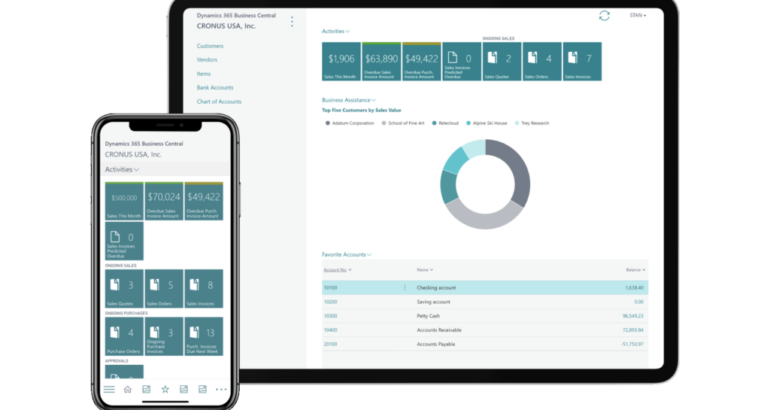
Business Central offers interactive dashboards and customizable reports that provide real-time visibility into key business metrics, including:
- Revenue
- Profitability
- Cash flow
- Inventory performance
- Sales trends
- Customer activity
Managers can quickly identify opportunities and address potential issues before they become major problems.
The platform also integrates with Microsoft Power BI, enabling advanced data visualization and business intelligence reporting.
Scalability for Growing Businesses
Business needs evolve over time, and software should grow alongside the organization.
Business Central is highly scalable, allowing companies to start with core ERP functions and expand as operations become more complex.
Additional modules and third-party applications can be added to support:
- Manufacturing
- Field service
- E-commerce
- Customer relationship management (CRM)
- Payroll
- Advanced warehousing
This flexibility ensures businesses only pay for the features they currently need while maintaining the option to expand in the future.
Cloud Security and Reliability
Cybersecurity and data protection have become increasingly important for Australian businesses.
Microsoft invests heavily in cloud security, providing multiple layers of protection for Business Central users.
Key security benefits include:
- Data encryption
- Automatic backups
- Multi-factor authentication
- Role-based access controls
- Continuous security monitoring
- Compliance with international security standards
Cloud hosting also minimizes the need for businesses to maintain expensive on-premises servers and IT infrastructure.
Supporting Australian Business Requirements
Business Central can be configured to meet Australian business and regulatory requirements, including:
- Goods and Services Tax (GST)
- Business Activity Statement (BAS) reporting
- Multi-currency transactions
- Local financial reporting
- Australian banking integrations
This localization helps businesses remain compliant while simplifying financial operations.
Better Customer Service
An integrated ERP system improves customer satisfaction by providing employees with immediate access to accurate customer information.
Sales and customer service teams can quickly view:
- Order history
- Payment status
- Inventory availability
- Delivery schedules
- Customer preferences
Faster access to information enables quicker responses, more accurate order processing, and stronger customer relationships.
Cost-Effective Digital Transformation
Traditional ERP implementations often require significant upfront investments in hardware, software, and IT resources.
Business Central follows a cloud-based subscription model, making it more affordable for SMEs. Businesses benefit from:
- Lower initial costs
- Predictable monthly expenses
- Automatic software updates
- Reduced infrastructure maintenance
- Faster deployment
This approach allows companies to adopt enterprise-grade technology without overwhelming capital expenditure.
Choosing the Right Implementation Partner
While Business Central is user-friendly, successful implementation depends on careful planning and expert guidance.
A qualified Microsoft implementation partner can help businesses:
- Assess operational needs
- Configure workflows
- Migrate existing data
- Train employees
- Customize reports
- Provide ongoing support
Working with an experienced partner reduces implementation risks and helps businesses achieve faster returns on their ERP investment.
Conclusion
Microsoft Dynamics 365 Business Central offers Australian SMEs a powerful, flexible, and cost-effective ERP solution that supports long-term business growth. By combining financial management, inventory control, sales, purchasing, reporting, and automation within a single cloud-based platform, it eliminates many of the inefficiencies associated with disconnected business systems.
Its seamless integration with Microsoft 365, real-time analytics, strong security features, and scalable architecture make it an excellent choice for businesses looking to improve operational efficiency and remain competitive in an increasingly digital marketplace.
For Australian SMEs seeking an ERP system that can streamline operations today while supporting future expansion, Microsoft Dynamics 365 Business Central represents a smart and strategic investment in sustainable business success.