Table of Contents
ToggleIntroduction
Higher education has traditionally focused on academic knowledge, technical expertise, examinations, and qualifications. While these areas remain important, employers and institutions increasingly recognize that academic knowledge alone does not prepare students for every challenge they will face after graduation. Communication, teamwork, adaptability, leadership, problem-solving, and emotional awareness can be equally valuable in professional and personal environments.
These abilities are commonly described as soft skills. Their growing importance in higher education reflects changes in workplaces, technology, collaboration, and the expectations placed on graduates. Universities and colleges are therefore placing greater emphasis on helping students develop skills that complement their academic and technical knowledge.
What Are Soft Skills?
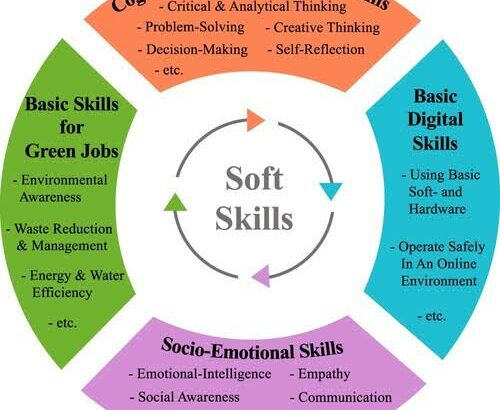
Soft skills are interpersonal and behavioral abilities that influence how people communicate, work, solve problems, and interact with others. Unlike technical skills, which are usually specific to a profession, soft skills can be applied across many different careers and situations.
Examples include communication, teamwork, time management, leadership, critical thinking, creativity, adaptability, conflict resolution, and professionalism.
For a university student, these skills can influence everything from classroom participation and group projects to internships, job interviews, workplace relationships, and career development.
Why Academic Knowledge Alone Is Not Enough
A graduate may have excellent subject knowledge but still struggle to communicate ideas effectively or work within a team. Similarly, someone with strong technical abilities may need to develop time management or presentation skills before succeeding in a professional environment.
Modern workplaces frequently require employees to collaborate across departments and communicate with people from different backgrounds. Employees may need to explain complicated information to non-specialists, participate in meetings, respond to changing priorities, and solve unexpected problems.
Higher education can provide opportunities for students to develop these abilities before entering the workforce.
Communication Skills
Communication is one of the most important soft skills for university students. It includes speaking clearly, writing effectively, listening actively, and presenting information in an understandable way.
Students may need to write reports, deliver presentations, participate in discussions, communicate with professors, and collaborate with classmates.
These experiences can prepare students for professional situations where clear communication affects productivity and workplace relationships.
Teamwork and Collaboration
Many academic programs use group assignments and collaborative projects to teach students how to work with others. These activities can help students understand different perspectives and develop cooperation skills.
Effective teamwork involves more than simply dividing tasks. Students must communicate responsibilities, manage disagreements, meet deadlines, and contribute toward a shared objective.
These experiences can be valuable because collaboration is common across industries.
Critical Thinking and Problem-Solving
Higher education also provides an environment where students can develop critical-thinking abilities. Instead of simply memorizing information, students can learn to evaluate evidence, identify assumptions, compare alternatives, and reach reasoned conclusions.
Problem-solving skills are particularly useful when situations do not have straightforward answers. Students who learn to approach complex problems systematically can apply these abilities to academic projects as well as professional challenges.
Adaptability in a Changing Workplace
Technology and business practices continue to evolve. As a result, graduates may enter careers that look different from those that existed when they began university.
Adaptability allows people to respond to changing technologies, responsibilities, organizational structures, and expectations.
Higher education can encourage adaptability by exposing students to new tools, interdisciplinary subjects, unfamiliar problems, and different approaches to learning.
Leadership Development
Leadership is another soft skill that can be developed during higher education. Students do not necessarily need to hold formal leadership positions to develop it.
Leading a student organization, coordinating a group assignment, organizing an event, or taking responsibility for a project can provide practical experience.
Leadership involves communication, accountability, decision-making, delegation, and the ability to motivate or support others.
Emotional Intelligence
Emotional intelligence involves recognizing and managing one’s emotions while understanding the emotions of others. It can contribute to effective communication, conflict management, teamwork, and professional relationships.
University students encounter different personalities, opinions, pressures, and social situations. Learning how to respond constructively can help them build healthier academic and professional relationships.
How Universities Can Develop Soft Skills
Institutions can incorporate soft-skill development into existing academic programs rather than treating it as a separate subject.
Useful approaches include:
- Group projects and collaborative assignments
- Presentations and public-speaking activities
- Internships and work placements
- Leadership programs
- Student clubs and organizations
- Case studies and problem-based learning
- Peer feedback
- Career-development workshops
- Community projects and volunteering
These activities allow students to practice skills rather than simply read about them.
The Role of Technology
Technology has also changed how soft skills are developed. Online collaboration platforms allow students to work together across geographical boundaries. Virtual presentations and digital communication provide additional opportunities to practice professional communication.
At the same time, technology can make human skills even more important. As automation and artificial intelligence handle an increasing number of routine tasks, abilities such as communication, creativity, collaboration, judgment, and adaptability can remain valuable complements to technical expertise.
Benefits for Students and Employers
Students who develop strong soft skills may be better prepared to transition from education to employment. They can approach interviews with greater confidence, communicate their ideas more effectively, and adapt to different workplace situations.
Employers also benefit when graduates can contribute to teams, communicate with colleagues, solve problems, and learn new responsibilities.
Soft skills therefore create value beyond individual academic performance.
Conclusion
The growing importance of soft skills in higher education reflects the changing nature of learning and employment. Academic qualifications and technical expertise remain essential, but graduates also need the ability to communicate, collaborate, think critically, adapt, and manage professional relationships.
Universities can help students develop these abilities through practical projects, internships, presentations, teamwork, leadership opportunities, and experiential learning. By combining academic knowledge with strong interpersonal and professional skills, higher education can provide students with a broader foundation for navigating an increasingly complex and changing world.