Healthcare technology is transforming the way medical professionals diagnose, monitor, and manage diseases. Digital health solutions are becoming increasingly important because they help healthcare providers identify potential health problems earlier, improve patient engagement, and make medical services more accessible. One notable development in this area was the presentation of milestone data by Healthy.io and Geisinger at the American Heart Association (AHA) Scientific Sessions 2024.
Their collaboration highlights the growing role of smartphone-based technology and digital diagnostics in identifying kidney health risks. By combining innovative healthcare technology with clinical expertise, the initiative demonstrates how convenient testing methods can support preventive healthcare and improve patient outcomes.
Understanding the Background of the Collaboration
The study involved three major organizations: Healthy.io, Geisinger, and Boehringer Ingelheim.
The collaboration focused on improving chronic kidney disease (CKD) screening among people at increased risk of developing the condition.
CKD is a serious health concern because it can progress without noticeable symptoms during its early stages. According to the study announcement, more than 35 million Americans are affected by CKD, and approximately 90% of people with the condition may be unaware that they have it.
People with type 2 diabetes and hypertension are particularly vulnerable. Regular kidney screening can help healthcare professionals identify early warning signs and recommend appropriate medical care.
Healthy+1
What Is Healthy.io’s Minuteful Kidney Solution?
One of the central technologies involved in this research is Healthy.io’s Minuteful Kidney solution.
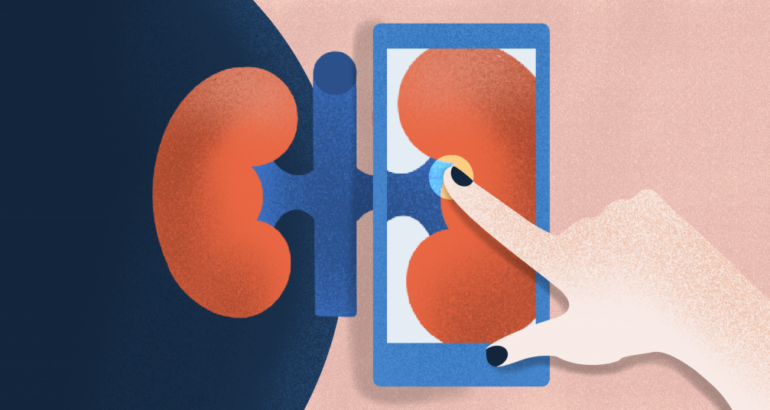
Minuteful Kidney is a smartphone-enabled home testing solution designed to measure the urine albumin-to-creatinine ratio (uACR). This measurement helps identify albumin, a protein that can appear in urine when the kidneys are damaged.
The solution combines a home urine testing kit with a smartphone application. Users can perform the test at home and use their smartphone camera to analyze the test results.
This approach aims to make kidney screening more convenient by reducing the need for patients to visit a laboratory for every routine test.
It also provides an opportunity for healthcare organizations to reach patients who might otherwise delay or miss recommended screening appointments.
Key Findings Presented at AHA 2024
The study findings were presented by Dr. Alexander Chang, Associate Professor in the Department of Population Health Sciences at Geisinger, during the American Heart Association’s Hypertension Scientific Sessions in Chicago in September 2024.
The first phase of the research involved approximately 3,998 Geisinger patients with type 2 diabetes or hypertension who had not completed a uACR test during the previous year.
The findings demonstrated a significant improvement in screening participation among patients offered the smartphone-enabled home testing solution.
Some important results included:
-
53.1% testing completion: Patients in the intervention group completed recommended kidney screening at a substantially higher rate.
-
21.3% testing completion: The comparison group receiving usual care had a considerably lower completion rate.
-
2.5 times improvement: The intervention achieved approximately 2.5 times the testing completion rate compared with the usual-care group.
-
94% patient satisfaction: Participants rated the home testing process as easy or very easy.
-
88% home-testing preference: Most surveyed participants preferred home testing over traditional testing arrangements.
These results suggest that convenient digital healthcare solutions can encourage more people to complete important preventive screenings.
PR Newswire+1
Significant Improvements Among Patients with Hypertension and Diabetes
One particularly important finding was the improvement in kidney screening among patients with hypertension and type 2 diabetes.
Both conditions are associated with an increased risk of kidney damage. However, patients do not always complete recommended kidney screening tests.
The study reported the following results:
| Patient group | Home testing group | Usual-care group |
|---|---|---|
| Hypertension | 53.4% | 12.5% |
| Type 2 diabetes | 52.7% | 30.0% |
The hypertension subgroup experienced a particularly substantial improvement. More than half of the patients offered home testing completed screening, compared with just 12.5% in the usual-care group.
These findings highlight the potential value of targeted digital health programs for people who face a higher risk of developing chronic diseases.
How Smartphone Technology Can Improve Kidney Screening
Traditional healthcare systems often depend on patients visiting laboratories or healthcare facilities to complete diagnostic tests. Although these methods remain important, transportation difficulties, scheduling challenges, limited awareness, and other barriers can prevent patients from receiving timely screening.
Smartphone-enabled testing offers another approach.
With solutions such as Minuteful Kidney, patients can complete certain screening procedures from home. The smartphone application guides users through the process and helps analyze the test results.
This technology offers several potential advantages:
Greater Accessibility
Patients who live far from healthcare facilities may find home testing more convenient. It can also help healthcare organizations reach individuals who have difficulty attending regular appointments.
Improved Patient Engagement
Simple testing procedures can encourage patients to take a more active role in managing their health.
Earlier Identification of Kidney Risks
Regular uACR testing can help identify albuminuria, an important indicator of potential kidney damage. Early identification allows healthcare professionals to evaluate patients and determine appropriate next steps.
Better Healthcare Coordination
Digital testing can connect patients with healthcare providers and support timely follow-up when results require further evaluation.
The Importance of Follow-Up Care
Screening alone is not enough to improve long-term health outcomes. Patients with abnormal results need appropriate medical guidance, additional evaluation when necessary, and ongoing monitoring.
The Healthy.io and Geisinger initiative addressed this challenge by connecting testing results with Geisinger’s electronic medical record system.
Patients with abnormal results received guidance about the next steps through the application. Healthcare providers could also access relevant results to support clinical decision-making.
Preliminary Phase 2 findings reported that 66% of individuals who received abnormal results used the application’s scheduling feature to arrange an appointment with their Geisinger primary care physician.
This demonstrates how digital healthcare platforms can help connect screening with follow-up medical services.
PR Newswire
The Role of Digital Healthcare in Reducing Health Inequities
Access to preventive healthcare is not equal for everyone. People living in rural communities, older adults, and individuals facing transportation or scheduling challenges may experience additional barriers to routine medical testing.
Smartphone-based healthcare solutions could help reduce some of these obstacles.
The study reported that improvements in screening participation were consistent across demographic subgroups. This is an encouraging finding because it suggests that home testing may benefit a broad range of patients.
However, digital solutions must also consider smartphone accessibility, internet connectivity, digital literacy, and the availability of assistance for people who need additional support.
Combining technology with traditional healthcare services can help create a more inclusive approach to preventive medicine.
What This Means for the Future of Kidney Disease Management
The findings presented at AHA 2024 represent an important step toward improving chronic kidney disease screening through digital innovation.
The research suggests that healthcare providers can potentially improve testing participation by offering convenient home-based diagnostic solutions alongside traditional medical services.
For patients with diabetes or hypertension, regular kidney health monitoring is particularly important. Identifying potential problems earlier may help doctors recommend lifestyle changes, additional testing, or appropriate treatment.
The collaboration also demonstrates how healthcare technology companies, medical providers, and pharmaceutical organizations can work together to address gaps in preventive care.
Nevertheless, increased screening participation should not be confused with proof that the technology independently prevents kidney disease or improves long-term survival. Further clinical evidence and continued monitoring are necessary to establish its broader impact.
Conclusion
The collaboration between Healthy.io, Geisinger, and Boehringer Ingelheim highlights the growing importance of smartphone-enabled healthcare solutions in chronic kidney disease screening.
The milestone data presented at AHA 2024 demonstrated that Minuteful Kidney significantly increased uACR testing participation among patients with type 2 diabetes or hypertension. High patient satisfaction and a strong preference for home testing further supported the potential of this approach.
As digital healthcare continues to evolve, technologies that make preventive screening more accessible could play an important role in improving patient engagement and supporting earlier disease identification.
Ultimately, combining convenient digital diagnostics with professional medical guidance and appropriate follow-up care may help healthcare systems address critical gaps in kidney disease management.
Frequently Asked Questions (FAQs)
1. What is Healthy.io?
Healthy.io is a digital healthcare technology company that develops smartphone-based diagnostic solutions and digital health services.
2. What is Minuteful Kidney?
Minuteful Kidney is a smartphone-enabled home urine testing solution designed to measure the urine albumin-to-creatinine ratio and support kidney disease screening.
3. What was the main finding of the AHA 2024 study?
The study found that smartphone-enabled home testing increased kidney screening completion approximately 2.5 times compared with usual care.
4. Who participated in the study?
Approximately 3,998 Geisinger patients with type 2 diabetes or hypertension who had not completed a uACR test during the previous year participated in the study.
5. Why is early kidney disease detection important?
Early detection helps healthcare professionals identify potential kidney damage, evaluate disease risks, and recommend appropriate treatment and monitoring before the condition progresses.