The start of a new school year brings excitement, new routines, fresh learning opportunities, and plenty of preparation. Along with buying school supplies and organizing schedules, parents can use this time to check in on their child’s health and wellbeing.
A simple back-to-school health checklist can help families identify areas that may need attention before classes begin. From sleep and nutrition to vaccinations, dental care, physical activity, and emotional wellbeing, small preparations can make the transition into a busy school routine much smoother.
1. Schedule a Routine Health Checkup
A routine medical checkup can be a useful first step before the school year begins. It gives parents an opportunity to discuss their child’s overall health and raise any concerns with a healthcare professional.
Depending on the child’s age and circumstances, a checkup may include reviewing growth, general health, hearing, vision, and other age-appropriate concerns.
If your child has an ongoing health need, make sure you understand how it may need to be managed during school hours. Teachers and appropriate school staff may need relevant information, particularly for conditions that require medication or special support.
2. Review Vaccination Records
Schools often have vaccination requirements, and recommendations can vary according to age, location, and individual circumstances.
Before the school year starts, check your child’s vaccination record and speak with their healthcare provider about any vaccines that are due.
Keeping vaccinations up to date is an important part of protecting children and communities from preventable illnesses.
If you are unsure whether your child’s records are complete, don’t rely on memory. Check the official documentation or ask your healthcare provider.
3. Don’t Forget Dental Health
Dental care is another important part of a child’s overall health.
If your child is due for a dental checkup, scheduling it before or near the beginning of the school year can help identify problems early.
Encourage children to brush their teeth regularly with fluoride toothpaste and develop consistent oral hygiene habits. Depending on their age, parents may need to supervise or assist with brushing.
A healthy routine at home can make dental care feel like an ordinary part of the day rather than an occasional task.
4. Reset the Sleep Schedule
Summer holidays can easily disrupt children’s sleeping patterns. Staying up late and waking later may feel natural during vacation, but suddenly returning to early school mornings can be difficult.
Start adjusting the sleep schedule gradually before school begins.
Move bedtime and wake-up time closer to the school routine over several days. A consistent evening routine can also help children wind down.
Reducing stimulating activities close to bedtime and creating a comfortable sleeping environment may make it easier to settle down.
Adequate sleep is important for children’s learning, mood, attention, and overall wellbeing.
5. Build a Nutritious Breakfast Routine
Mornings can become chaotic once school starts, which is why planning breakfast options in advance can help.
A balanced breakfast can include foods from different food groups, such as whole grains, fruit, dairy or alternatives, and a source of protein.
The goal isn’t to create elaborate meals every morning. Simple options such as oatmeal with fruit, whole-grain toast with eggs, yogurt with fruit, or other nutritious choices can make mornings easier.
If your child doesn’t enjoy eating immediately after waking, discuss practical alternatives with your healthcare provider if you’re concerned about their overall nutrition.
6. Prepare Healthy School Snacks
Children may become hungry between meals, especially during active school days.
When school policies allow snacks, choose convenient options that provide useful nutrients. Fresh fruit, vegetables, yogurt, nuts or seeds where appropriate, and whole-grain foods can be practical choices.
Remember that children’s nutritional needs vary by age and activity level. The focus should be on a balanced eating pattern rather than labeling individual foods as completely “good” or “bad.”
For children with food allergies, make sure they know which foods they need to avoid and that the school has the necessary information.
7. Encourage Regular Physical Activity
Physical activity should remain part of a child’s routine throughout the school year.
Walking or cycling to school where safe, playing outdoors, participating in sports, dancing, swimming, or simply spending time moving with friends can all contribute to an active lifestyle.
Children are more likely to enjoy physical activity when it feels like play rather than punishment.
Parents can also encourage activity by participating. A family walk, bike ride, or game outdoors can provide exercise while creating an opportunity to spend time together.
8. Check Vision and Hearing
Children may not always realize that they have difficulty seeing the board or hearing instructions.
If your child frequently squints, complains of headaches, sits unusually close to screens, struggles to follow classroom instructions, or asks people to repeat themselves, consider discussing these signs with a healthcare professional.
Routine vision and hearing checks can help identify problems that might otherwise interfere with learning.
If your child already wears glasses or hearing devices, make sure everything is working properly before school starts.
9. Talk About Hand Hygiene
Schools bring many children together, making good hygiene habits especially important.
Teach children to wash their hands with soap and water at appropriate times, particularly before eating and after using the bathroom. They should also learn to cover coughs and sneezes appropriately.
Hand sanitizer can be useful in situations where soap and water aren’t readily available, but children should follow school guidance regarding its use.
These simple habits can help reduce the spread of various infections.
10. Pay Attention to Emotional Health
Back-to-school preparation isn’t only physical.
Children can experience anxiety about new teachers, academic expectations, friendships, bullying, changing classrooms, or simply returning to a structured routine.
Give your child an opportunity to talk about how they feel. Instead of immediately offering solutions, listen carefully and ask open-ended questions.
You might ask what they are looking forward to, what they are worried about, or whether anything about the upcoming school year feels difficult.
For persistent or severe emotional concerns, consider speaking with a pediatrician, school counselor, psychologist, or another qualified professional.
11. Create a Calm Morning Routine
A predictable morning routine can reduce stress for both children and parents.
Prepare school bags, uniforms, clothing, lunch items, and other essentials the night before whenever possible.
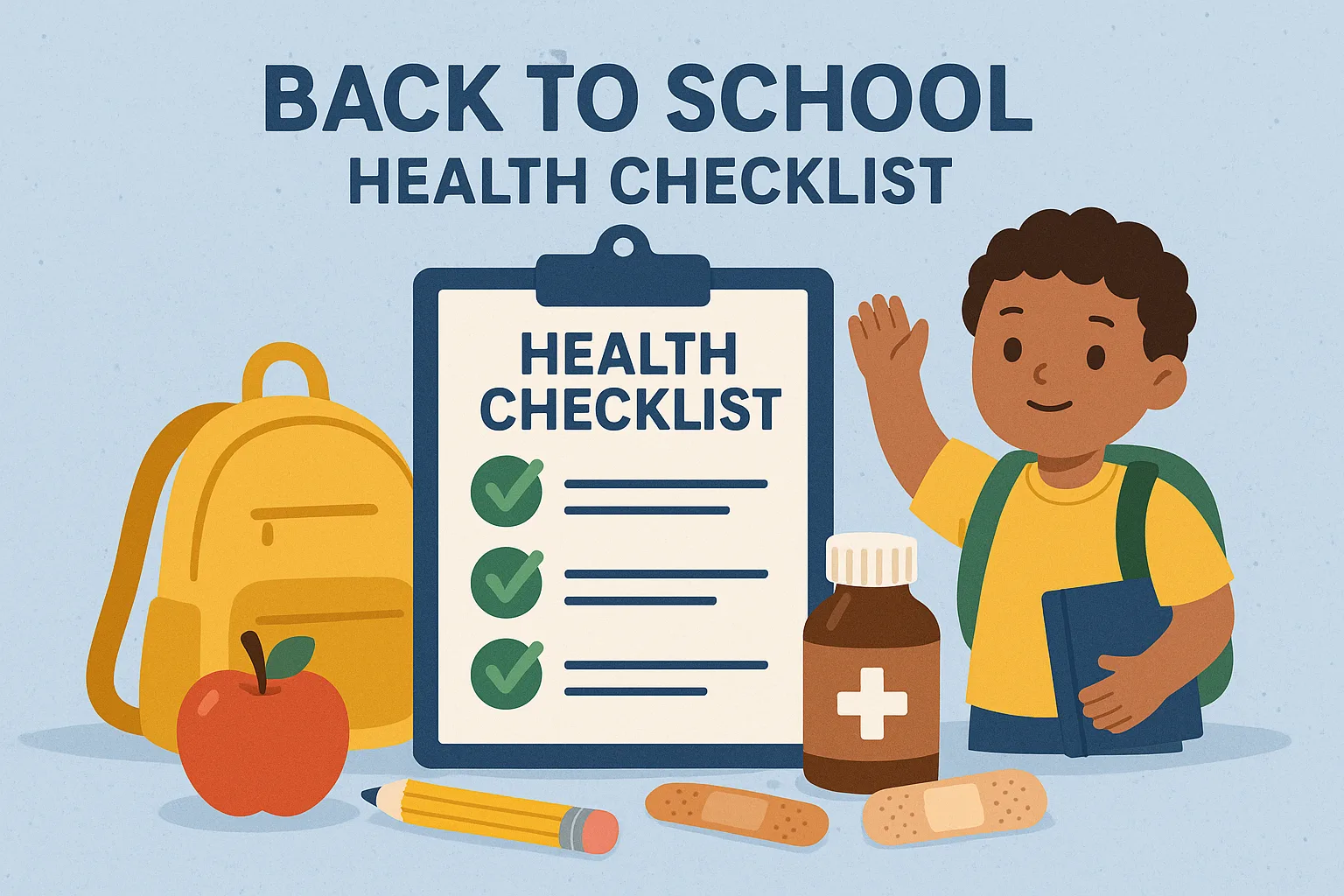
You can create a simple checklist that your child can gradually learn to follow independently.
The objective isn’t perfection. It’s reducing the number of decisions that need to be made when everyone is rushing out the door.
12. Teach Children to Speak Up About Health Problems
Children should feel comfortable telling a trusted adult when they don’t feel well.
Depending on their age, teach them to recognize basic signs such as pain, dizziness, breathing difficulty, feeling unusually sick, or an injury that needs attention.
They should also know which adults at school they can approach if they need help.
Giving children this knowledge encourages them to take an age-appropriate role in their own health.
Final Thoughts
A successful back-to-school health routine doesn’t require complicated planning. A few simple steps—checking medical and dental needs, reviewing vaccinations, restoring healthy sleep habits, preparing nutritious meals, encouraging activity, and supporting emotional wellbeing—can make a meaningful difference.
Most importantly, remember that every child is different. Health recommendations can vary according to age, medical history, development, and individual needs. When you have concerns, consult your child’s healthcare professional rather than relying solely on general advice.
The goal isn’t to make your child’s school year completely problem-free. It’s to give them a strong foundation so they can learn, play, grow, and feel supported as they begin another school year.