
Future buyers of General Motors Co.’s semiautonomous driving system will have to be comfortable with Big Brother sitting in the passenger seat.
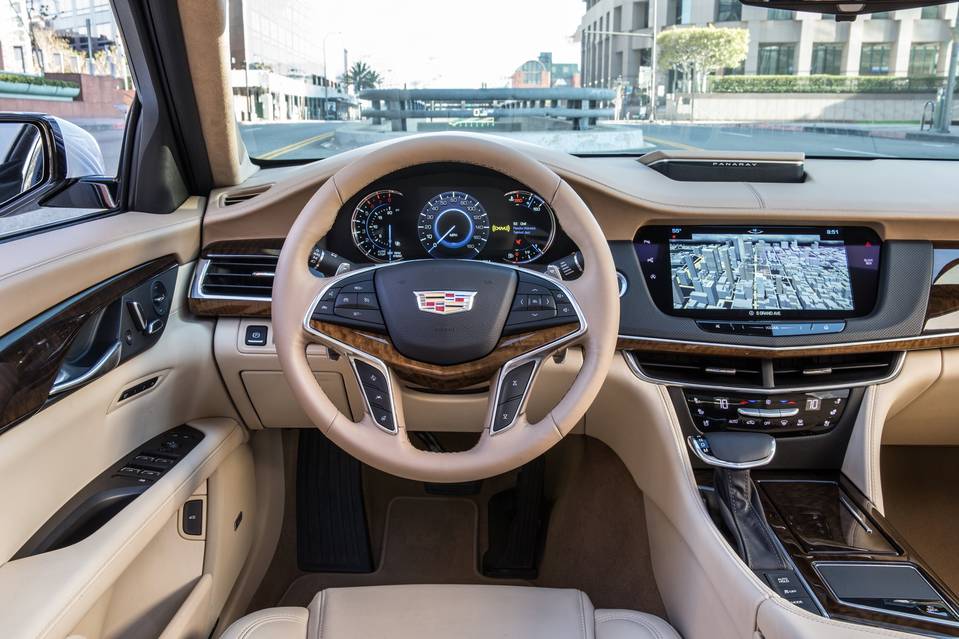
The nation’s largest auto maker aims to release its Super Cruise on a Cadillac next year, and will feature eye tracking in the cabin, a first for a U.S. car maker.
GM will duel with Volvo Car Corp.’s Pilot Assist and Tesla Motors Inc.’s Autopilot, both driver-assistance systems that can control a moving vehicle. While Tesla’s Autopilot requires periodic handling by the driver, GM’s system is expected to go a step further in monitoring the alertness of human drivers.
The Detroit car maker, which has been testing the eye-tracking feature for a couple of years, hopes to be ahead of its domestic competitors and cater to consumers who increasingly are looking for automated driving-assistance features. GM hasn’t said what the option will cost.
In a recent interview, Mark Reuss, GM executive vice president for global product development, said the current way some auto makers monitor alertness—by requiring periodic touching of the steering wheel—isn’t sufficient because “you can defeat the hands-on-the-wheel devices pretty readily.” That is why GM “will use something that’s pretty hard to get around,” he said.
OnStar, launched in the 1990s as a concierge service, has taken on more communication functions as GM’s cars have become more connected via embedded Wi-Fi connections and integration with smartphones. Super Cruise will be an option that requires OnStar services, the auto maker said.
GM had planned to launch Super Cruise earlier, but the program was delayed for several reasons, including fine-tuning the interface drivers use to connect with the system. Mr. Reuss said one of the goals has been to refine the way drivers interact with a semiautonomous system.
Super Cruise’s extra layer of supervision will address concerns harbored by regulators and industry participants about a driver’s tendency to not pay attention when a semiautonomous driving aid is active.
German auto makers including Audi, the luxury-car unit of Volkswagen AG, are also expected to launch eye-tracking systems in the near future. Suppliers of the technology expect regulators to eventually require them in all car models.
U.S. Department of Transportation officials have said that despite concerns about driver behavior, systems such as Tesla’s Autopilot can reduce highway fatalities. Certain semiautonomous features will soon be required, and regulators have encouraged auto makers to proceed aggressively.But such systems also raise privacy concerns, particularly if auto makers retain driver data that could be passed along to insurance companies or public safety authorities without permission.
A GM spokesman said the auto maker collects personal data through OnStar from customers who purchase the service, but only shares that information with the car owner’s consent.
Chris Calabrese, policy head at the Center for Democracy and Technology, a Washington, D.C., group that advocates for consumer privacy protections, said car companies should not progress at the expense of privacy. He said auto makers have shown “intent” to protect privacy, but said “they have to get it right.”
As more data is gathered, Mr. Calabrese recommends that auto companies delete driver data soon after it is collected rather than compile a continuous record.
Auto-parts maker Delphi Automotive PLC, once a unit of GM, is a developer of eye-tracking systems, which are designed to work even when the driver’s head is obscured by, say, sunglasses or a ball cap. The system reads the eye socket and nose to determine whether the driver is alert and looking at the road; if not, audible warnings, lights or vibration are used to prod the person.
More driver monitor tools are on the way. Modar Alaoui, founder and chief executive of Silicon Valley startup Eyeris Technologies Inc., said his company produces software that also monitors head position, body orientation, yawning, and even emotional well-being. The company’s software is tuned to work on cars with relatively old cameras or processors.
Mr. Reuss said driver monitoring is one piece of GM’s approach to a safer self-driving platform. He said Super Cruise will be limited to highways that have detailed map information available; if the driver leaves the highway, Super Cruise shuts down.
“It can’t go everywhere,” he said.
[Source:-The Wall Street Journal]