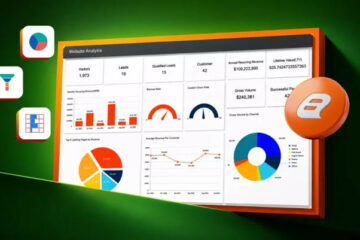

Managing finances in real estate development becomes increasingly complex as the number of projects grows. Developers often handle multiple developments simultaneously, each with separate legal entities, financing arrangements, regulatory requirements, and construction timelines. Tracking land acquisition costs, contractor payments, construction budgets, milestone-based revenue, and project profitability across many developments requires a highly organized financial system.
While basic accounting tools or spreadsheets might work for a small portfolio, they quickly become inadequate when a company begins managing ten or more projects at once. At that scale, financial accuracy, compliance reporting, and real-time visibility into project performance become essential.
This is where enterprise resource planning (ERP) platforms like Microsoft Dynamics 365 Business Central play a crucial role.
Table of Contents
ToggleThe Growing Complexity of Real Estate Financial Management
Two major factors are making financial management in real estate development more challenging.
Increasing regulatory requirements
In markets governed by Real Estate Regulatory Authority, compliance obligations have become stricter. Updates introduced in 2025 require developers to provide quarterly disclosures regarding project progress, financial performance, and escrow account usage.
Additional compliance measures include:
-
Mandatory third-party escrow audits
-
Compliance certificates before project launches
-
Financial penalties that can reach up to 5% of total project value for violations
Managing these reporting requirements manually across multiple projects creates significant compliance risks.
Rapid adoption of construction technology
The construction software market is also evolving quickly. Industry reports show the global construction ERP market surpassed $3.7 billion in 2024 and continues to grow steadily.
Developers that still rely on disconnected spreadsheets or traditional accounting software may struggle to compete with companies using cloud-based ERP systems that provide real-time financial insights.
Why Spreadsheets and Legacy Tools Fall Short
When developers attempt to manage a growing portfolio with fragmented tools, several operational problems typically emerge.
Lack of real-time project financial visibility
Without integrated systems, finance teams often reconcile accounting records and project trackers manually. Budget overruns may only become visible weeks after they occur.
Manual work-in-progress accounting
In real estate development, revenue is recognized gradually as construction progresses. Tracking work-in-progress (WIP) manually often leads to calculation errors and audit issues.
Inconsistent cost allocation
Shared costs—such as legal fees, financing charges, and overhead—must be distributed across projects. Without automated allocation rules, these calculations become inconsistent and difficult to audit.
Fragmented compliance reporting
Generating regulatory reports requires pulling data from multiple systems. This process is time-consuming and increases the risk of errors.
ERP Capabilities Developers Need
For developers managing multiple projects, a modern ERP system provides centralized financial control and operational visibility.
Project budget tracking
With Business Central, every budget line item can be monitored against actual spending in real time. Project managers can track financial performance at the work breakdown structure (WBS) level and quickly identify cost variances.
Built-in WIP accounting
The platform automatically records the financial value of completed work that has not yet been invoiced. This ensures financial statements accurately reflect project performance at any stage.
Multi-entity financial management
Many real estate firms operate separate companies or special purpose vehicles (SPVs) for individual projects. Business Central consolidates financial data across these entities while preserving detailed project-level reporting.
Automated milestone billing
Construction milestones can trigger automated invoicing, improving cash flow visibility and reducing billing delays.
Advanced reporting and automation
Integration with tools such as Microsoft Power BI enables executives to access real-time dashboards showing:
-
Project profitability
-
Budget variance
-
Escrow account utilization
Automation tools like Microsoft Power Automate can streamline approvals, compliance reminders, and reporting workflows.
Supporting Implementation With Advaiya
Implementing an ERP system in the real estate sector requires careful planning and configuration. Financial structures must align with project budgets, revenue recognition models, and regulatory reporting standards.
Advaiya has worked with organizations transitioning from legacy systems such as Tally to cloud-based ERP environments.
In one implementation involving a consulting organization with more than 15 business units and over 1,000 employees, migrating to Dynamics 365 Business Central delivered measurable improvements, including:
-
80% improvement in billing accuracy
-
60% reduction in approval dependencies
The project also included integration with platforms like LeadSquared and Zing HRMS, demonstrating the complexity of modern enterprise deployments.
Managing the Full ERP Lifecycle
Successful ERP implementation requires more than installing software. It involves a complete transformation process that includes:
-
System discovery and requirements analysis
-
Data migration from legacy systems
-
Configuration of financial structures and workflows
-
Integration with CRM, HR, and document systems
-
Training and ongoing optimization
As a Microsoft Solutions Partner, Advaiya supports organizations throughout this lifecycle, particularly in industries like real estate and construction where project-based financial management is critical.
The Bottom Line
As real estate portfolios expand and regulatory requirements tighten, financial management becomes significantly more complex. Manual systems and disconnected accounting tools struggle to provide the accuracy, transparency, and real-time insights developers need.
Cloud ERP platforms such as Dynamics 365 Business Central allow developers to centralize financial operations, maintain compliance, and monitor project profitability across their entire portfolio.
For growing real estate companies, adopting a modern ERP system is no longer simply an efficiency upgrade—it has become a strategic necessity.